

Connecticut's Pulse: What Demographic and Economic Trends Mean for Real Estate in 2025
Connecticut's real estate landscape is a dynamic interplay of population shifts, economic vitality, and social indicators. As of the most recent data, the state presents a compelling picture for anyone involved in buying, selling, or investing in property.
Connecticut Data Snapshot (Most Recent Available):
- Population: Approximately 3.675 million (2024)
- Median Household Income: $93,760 (2023)
- Percentage with at least a Bachelor's Degree: 41.9% (2019-2023)
- Hispanic or Latino Population: Approximately 641,000 or 17.8% of the total population (2023)
- Uninsured Individuals: 5.5% (2023)
These figures, while seemingly disparate, collectively paint a detailed picture of the state's economic health and demographic makeup, both of which are crucial for understanding and navigating its real estate market.
The Deep Dive: Why These Numbers Matter for Real Estate
1. Population: The Foundation of Demand
A stable or growing population is the bedrock of real estate demand. Connecticut's population of 3.675 million in 2024, showing modest stability, is a critical factor. Each individual represents a potential resident, contributing to household formation and the fundamental need for housing units, whether for sale or rent. While significant population surges drive rapid market expansion, Connecticut's consistent numbers suggest sustained, rather than volatile, demand. This stability supports a healthy base for long-term real estate investment, as properties are less likely to experience sharp downturns due to a shrinking buyer or renter pool.
2. Median Household Income: Fueling Affordability and Purchasing Power
With a median household income of $93,760 in 2023, Connecticut boasts a relatively affluent populace compared to the national average. This high income level is a direct driver of housing affordability. Higher incomes enable residents to:
- Afford higher home prices: They can qualify for larger mortgages and absorb rising property values.
- Support robust rental markets: A strong income base means renters can afford higher rents, benefiting property owners.
Despite rising home prices (the median sale price for single-family homes was $432,500 in March 2025), Connecticut's median income suggests that homeownership remains accessible for a substantial segment of the middle class, especially in regions outside the most expensive areas like Fairfield County. This purchasing power underpins continued buyer interest and market stability.
3. Educational Attainment: Driving Desirability and Value
The impressive 41.9% of Connecticut residents holding at least a Bachelor's degree (2019-2023) indicates a highly educated workforce. This statistic is profoundly impactful for real estate:
- Higher Earning Potential: Education often correlates with higher-paying jobs, further enhancing residents' capacity to invest in housing.
- Desirable Neighborhoods: Areas with high educational attainment typically feature strong school systems, a wider array of amenities, and a vibrant professional environment. These factors enhance a neighborhood's desirability, leading to increased property values and sustained demand. For real estate professionals, identifying these highly educated corridors can pinpoint areas of strong appreciation and rental growth.
- Specific Housing Preferences: An educated populace may seek out particular housing characteristics, such as modern designs, proximity to cultural centers, or homes in top-tier school districts, influencing development and architectural trends.
4. Hispanic or Latino Population: A Growing Market Segment
The Hispanic or Latino population, standing at approximately 641,000 or 17.8% in 2023, represents a significant and growing demographic force in Connecticut's real estate market. This community often includes a substantial proportion of first-time homebuyers, creating consistent demand for entry-level and moderately priced homes. For real estate developers, understanding the specific needs and cultural preferences of this group can open up new opportunities for tailored housing projects and community-focused developments. Real estate agents who are culturally fluent and can serve this demographic effectively will find a strong and loyal client base.
5. Uninsured Individuals: An Indicator of Economic Stability
A relatively low uninsured rate of 5.5% in 2023 is a positive economic indicator for the real estate market. A population with broad health insurance coverage generally experiences greater financial stability. This means:
- Reduced Financial Risk: Unexpected medical emergencies are less likely to lead to severe financial distress, such as mortgage defaults or evictions. This translates to more reliable tenants and homeowners.
- Enhanced Consumer Confidence: When a population feels secure in their health and financial well-being, they are more likely to make long-term investments, including purchasing property. This confidence contributes to a robust and resilient housing market.
The Current Connecticut Real Estate Landscape (2025 Outlook)
This case serves as a powerful testament to why, despite technological advancements, real estate agents are far from obsolete. Here's why you might want to hold onto your trusted agent:
- Market Nuance and Human Intuition: While AI can process vast amounts of data, it often struggles with the nuanced, intangible factors that influence home values and market trends. An experienced agent possesses local market knowledge, an understanding of neighborhood-specific dynamics, and an intuitive grasp of buyer and seller psychology – elements that an algorithm, however sophisticated, may miss.
- Adapting to Volatility: The Opendoor situation highlights the critical need for adaptability in a dynamic market. Real estate agents, with their boots on the ground, can quickly pivot strategies in response to rising interest rates, shifting buyer demand, or economic downturns, offering personalized advice and negotiation skills that algorithms simply cannot replicate.
- The Emotional Journey: Buying or selling a home is often one of the most significant financial and emotional decisions a person makes. Agents provide essential support, empathy, and guidance, navigating the complexities and stresses of the process with a human touch that AI cannot deliver. They act as trusted advisors, not just transaction facilitators.
- Problem Solvers and Negotiators: Real estate transactions are rarely seamless. Unexpected issues, from inspections to financing, often arise. Agents are skilled problem-solvers and negotiators, advocating for their clients' best interests and finding solutions that can make or break a deal.
- Network and Local Connections: Agents bring a valuable network of contacts – from lenders and inspectors to contractors and other agents – that can streamline the entire process. This established network is a vital resource for both buyers and sellers.
Connecticut's real estate market is currently characterized by a competitive environment, primarily driven by low inventory and strong demand.
- Seller's Market: The number of active single-family home listings in March 2025 saw only a slight year-over-year increase, keeping selection tight. This results in homes selling quickly (average of 34 days on market for single-family homes) and often above asking price, especially in desirable areas.
- Rising Prices: The median sale price for single-family homes rose by 6.8% to $432,500 in March 2025, with condo prices also appreciating. This steady appreciation indicates a healthy market with sustained buyer interest. Connecticut has recently ranked among the top states for home price increases nationally.
- Condo Opportunities: The condo market shows more promising inventory growth (25.7% increase year-over-year in active listings), offering more choices and potentially less intense competition for buyers, particularly first-time homebuyers or those seeking more affordable options.
- Affordability Challenges and Migration: While the state's high median income helps, the rising prices, coupled with prevailing interest rates, pose affordability challenges for some. However, Connecticut has benefited from migration trends, with individuals and families moving from more expensive urban centers like New York City and Boston in search of more space and value, particularly in suburban areas.
- Housing Shortage: A significant housing shortage persists (estimated at 379,000 homes statewide), putting upward pressure on prices and highlighting the need for increased construction and diverse housing solutions.
Let's Talk Real Estate.
In conclusion, Connecticut's demographic and economic fundamentals provide a sturdy platform for its real estate market. High income levels and educational attainment attract and retain a strong buyer base, while an expanding diverse population adds new layers of demand. While challenges like low inventory and affordability exist, the underlying stability and desirability driven by these key indicators suggest that Connecticut's real estate market will remain a compelling arena for participants in the coming years.
Ready to turn these insights into your next successful move?
The market is moving, and opportunities are continually emerging. Don't just observe the trends; leverage them.
Schedule a personal consultation with a local Connecticut real estate expert (that's me!). Let's discuss your specific needs, get a precise valuation for your property, or explore current listings that perfectly align with your aspirations.
Your Connecticut real estate journey starts with informed decisions. Let's make them together.

 Facebook
 X
X
 Pinterest
 Copy Link
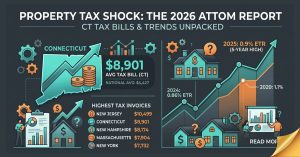
Is Your Connecticut Tax Bill Too High? New ATTOM Property Tax Data Exposed
Facebook X Linkedin Is Your Tax Bill Too High? Breaking Down the Latest ATTOM Data If you’ve opened your mail recently and felt a bit of “tax shock,” you aren’t alone. The latest annual report from ATTOM Data Solutions, released yesterday (April 9, 2026), confirms that property taxes are reaching historic highs across the country-and […]

The Tale of Two Connecticuts: Hartford vs. Fairfield Market 2026
Facebook X Linkedin The Tale of Two Connecticuts: Decoding the Market Trends in Hartford vs. Fairfield Counties As we move through the 2026 real estate season, many of my clients are asking the same question: “Is it the right time to move, or should I wait?” The truth is, there isn’t just one “Connecticut Market.” […]

CT Real Estate Market Report March 2026: The Spring Surge Begins
Facebook X Linkedin Connecticut Real Estate Market Pulse March 2026 Report The Connecticut residential market continues to show remarkable resilience as we head into the second quarter of 2026. While sales volume has adjusted seasonally, pricing power remains firmly in the hands of sellers.Key Takeaway: Despite a 6.3% dip in the total number of sales […]

What Nobody Tells You About Buying in Hartford This Spring
Facebook X Linkedin The 2026 Connecticut Real Estate Pulse Statewide Trends & Local Insights | April 7, 2026 As we enter the second quarter of 2026, the Connecticut real estate market is standing at a crossroads. While global geopolitical tensions and oil price volatility are creating “inflation anxiety,” the Nutmeg State remains one of the […]

CT Millionaire Tax: How HB 5133 Impacts Connecticut Real Estate in 2026
Facebook X Linkedin The “Millionaire Tax” Wave: Is Connecticut the Next Domino to Fall? As Washington State moves to tax high-earners, all eyes are on Hartford. For Connecticut homeowners and investors, the 2026 legislative session could signal a major shift in property and income tax policy. For years, the conversation around “taxing the rich” was […]

How $3.8B in Defense Contracts are Shaping Connecticut Real Estate
Facebook X Linkedin Defense Contracts: A Multi-Billion Dollar Windfall for Connecticut Real Estate Connecticut’s “Aerospace Alley” just received a massive vote of confidence. Two major defense contract modifications were recently announced, totaling nearly $3.9 billion in combined value. The Big Numbers: $3.86 Billion Heading to CT The scale of these investments is staggering, anchoring thousands […]

From Snowy Strength to Economic Skepticism: The Great Divide in CT Real Estate
Facebook X Linkedin The February Resilience vs. The March Pivot: A Connecticut Real Estate Crossroads As March draws to a close, we find ourselves standing at the “great divide.” While the snow of February made showings a challenge, the data shows a market that was surprisingly robust-just before a wave of economic shifts changed the […]


© 2026 MoxiWorks
© CENTURY 21 2023 - 2024. All rights reserved. CENTURY 21®, C21® and the CENTURY 21 Logo are registered service marks owned by Century 21 Real Estate LLC. Franchisee Legal Entity Name (not the dba) fully supports the principles of the Fair Housing Act and the Equal Opportunity Act. Each franchise is independently owned and operated. Any services or products provided by independently owned and operated franchisees are not provided by, affiliated with, or related to Century 21 Real Estate LLC nor any of its affiliated companies.
