

Structuring Investment Properties: Navigating LLC Taxation & Connecticut’s PET Changes

Real estate investors often use Limited Liability Companies (LLCs) to hold investment properties for liability protection, tax efficiency, and estate planning. However, taxation rules—both federal and state—can significantly impact how an LLC operates financially.
Exploring Tax Elections: The Role of Form 8832
LLCs are typically taxed as pass-through entities, meaning profits and losses flow to individual members’ tax returns. However, an LLC can file Form 8832 to elect corporate taxation, allowing the business to:

- Retain earnings within the LLC rather than distributing profits to members immediately.
- Take advantage of corporate tax rates, which may be beneficial for high-income investors.
- Structure ownership more flexibly, making it easier to reinvest in properties.
For real estate investors, this election is not always necessary, but it may offer strategic benefits depending on their financial goals.
Connecticut Taxation vs. Federal Treatment
While Form 8832 changes how an LLC is taxed federally, Connecticut has its own taxation rules that may not align with IRS classifications. One major consideration is Connecticut’s Pass-Through Entity Tax (PET).
Previously, Connecticut required pass-through LLCs to pay a 6.99% tax at the entity level, regardless of how they were taxed federally. However, as of 2024, LLCs can opt out of PET, allowing individual members to handle taxes instead.
How PET Opt-Out Could Benefit Investors
Some real estate investors may choose to opt out of PET due to:
- Lower individual tax rates—LLC owners in lower tax brackets might pay less by handling taxes personally.
- Multi-state investments—PET credits may not be recognized outside Connecticut, making it harder to offset taxes in other jurisdictions.
- Cash flow flexibility—Keeping funds within the LLC rather than paying tax at the entity level could benefit reinvestment strategies.
On the other hand, opting in to PET could be useful for investors looking to simplify tax filings and claim state tax credits.
Finding the Right Approach for Your Investment Strategy
LLC structuring isn’t a one-size-fits-all decision—each investor’s situation is unique. While these tax elections and state regulations offer potential advantages, consulting a tax professional ensures compliance and financial optimization.
📩 Let’s connect and explore how we can build your investment strategy together!
As a realtor specializing in investment properties, I help investors navigate real estate decisions that align with their business structure and long-term goals. Whether you’re looking for new investment opportunities, guidance on real estate transactions, or strategies for managing your portfolio, I’m here to help.

 Facebook
 X
X
 Pinterest
 Copy Link
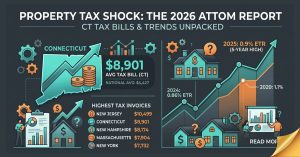
Is Your Connecticut Tax Bill Too High? New ATTOM Property Tax Data Exposed
Facebook X Linkedin Is Your Tax Bill Too High? Breaking Down the Latest ATTOM Data If you’ve opened your mail recently and felt a bit of “tax shock,” you aren’t alone. The latest annual report from ATTOM Data Solutions, released yesterday (April 9, 2026), confirms that property taxes are reaching historic highs across the country-and […]

The Tale of Two Connecticuts: Hartford vs. Fairfield Market 2026
Facebook X Linkedin The Tale of Two Connecticuts: Decoding the Market Trends in Hartford vs. Fairfield Counties As we move through the 2026 real estate season, many of my clients are asking the same question: “Is it the right time to move, or should I wait?” The truth is, there isn’t just one “Connecticut Market.” […]

CT Real Estate Market Report March 2026: The Spring Surge Begins
Facebook X Linkedin Connecticut Real Estate Market Pulse March 2026 Report The Connecticut residential market continues to show remarkable resilience as we head into the second quarter of 2026. While sales volume has adjusted seasonally, pricing power remains firmly in the hands of sellers.Key Takeaway: Despite a 6.3% dip in the total number of sales […]

What Nobody Tells You About Buying in Hartford This Spring
Facebook X Linkedin The 2026 Connecticut Real Estate Pulse Statewide Trends & Local Insights | April 7, 2026 As we enter the second quarter of 2026, the Connecticut real estate market is standing at a crossroads. While global geopolitical tensions and oil price volatility are creating “inflation anxiety,” the Nutmeg State remains one of the […]

CT Millionaire Tax: How HB 5133 Impacts Connecticut Real Estate in 2026
Facebook X Linkedin The “Millionaire Tax” Wave: Is Connecticut the Next Domino to Fall? As Washington State moves to tax high-earners, all eyes are on Hartford. For Connecticut homeowners and investors, the 2026 legislative session could signal a major shift in property and income tax policy. For years, the conversation around “taxing the rich” was […]

How $3.8B in Defense Contracts are Shaping Connecticut Real Estate
Facebook X Linkedin Defense Contracts: A Multi-Billion Dollar Windfall for Connecticut Real Estate Connecticut’s “Aerospace Alley” just received a massive vote of confidence. Two major defense contract modifications were recently announced, totaling nearly $3.9 billion in combined value. The Big Numbers: $3.86 Billion Heading to CT The scale of these investments is staggering, anchoring thousands […]

From Snowy Strength to Economic Skepticism: The Great Divide in CT Real Estate
Facebook X Linkedin The February Resilience vs. The March Pivot: A Connecticut Real Estate Crossroads As March draws to a close, we find ourselves standing at the “great divide.” While the snow of February made showings a challenge, the data shows a market that was surprisingly robust-just before a wave of economic shifts changed the […]


© 2026 MoxiWorks
© CENTURY 21 2023 - 2024. All rights reserved. CENTURY 21®, C21® and the CENTURY 21 Logo are registered service marks owned by Century 21 Real Estate LLC. Franchisee Legal Entity Name (not the dba) fully supports the principles of the Fair Housing Act and the Equal Opportunity Act. Each franchise is independently owned and operated. Any services or products provided by independently owned and operated franchisees are not provided by, affiliated with, or related to Century 21 Real Estate LLC nor any of its affiliated companies.
