Where vacation homes dominate: Top US counties with the highest share of seasonal housing
For many Americans, owning a second home in a beloved vacation spot is more than a dream — it's a sign they've made it. From ski retreats in Colorado to summer cottages on Cape Cod, these seasonal homes are reshaping the housing landscape in dozens of counties across the country. And with mortgage rates projected to decline in 2025, the window may soon open for more people to buy a slice of their favorite escape.
A 2023 U.S. Census Bureau analysis of 2020 housing data shows that more than 4.3 million homes were classified as “vacant seasonal,” making this the largest category of vacant housing nationally. Using this data, along with housing price data from the National Association of Realtors, Wealth Enhancement mapped where vacation homes make up the highest share of housing and examined the economic ripple effects in these markets.
America's vacation home market by the numbers
Seasonal homes are not a fringe market — far from it. According to the Census, seasonal housing units are the largest component of the nation's vacant housing inventory. They are heavily concentrated in coastal and mountain regions, where natural beauty, recreational opportunities, and rental demand intersect.
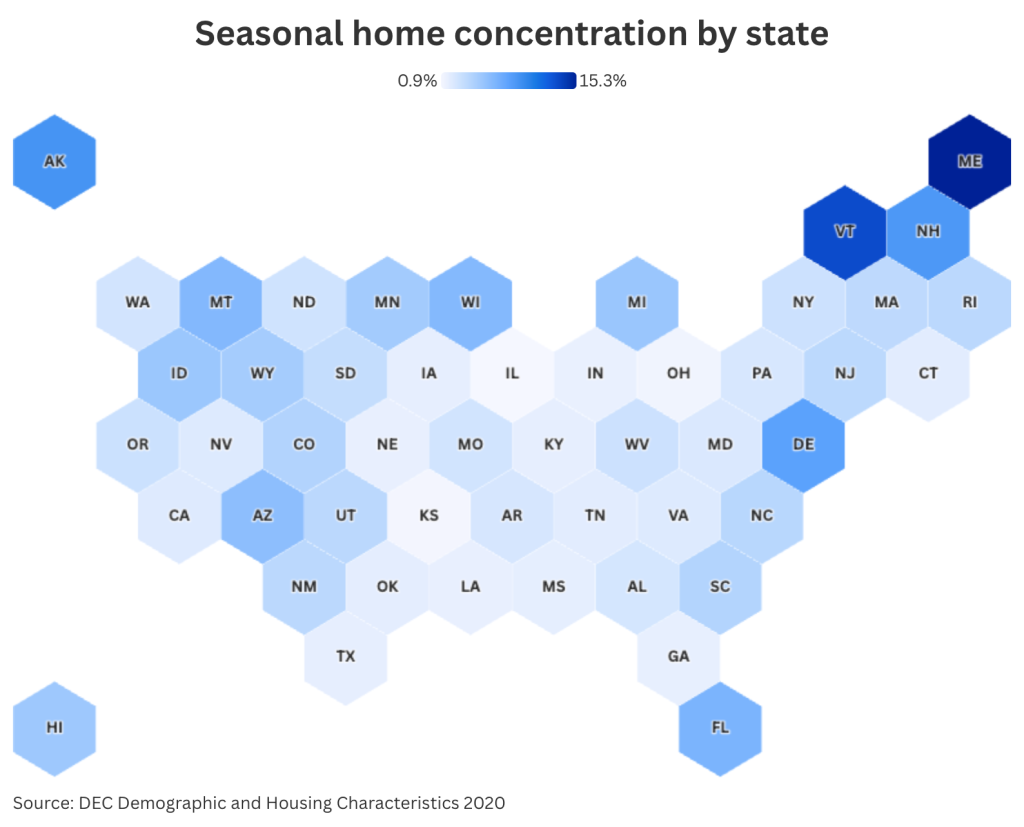
Florida stands out with 1 million second homes, making up over 15% of the national total.
Top vacation home counties: Where demand concentrates
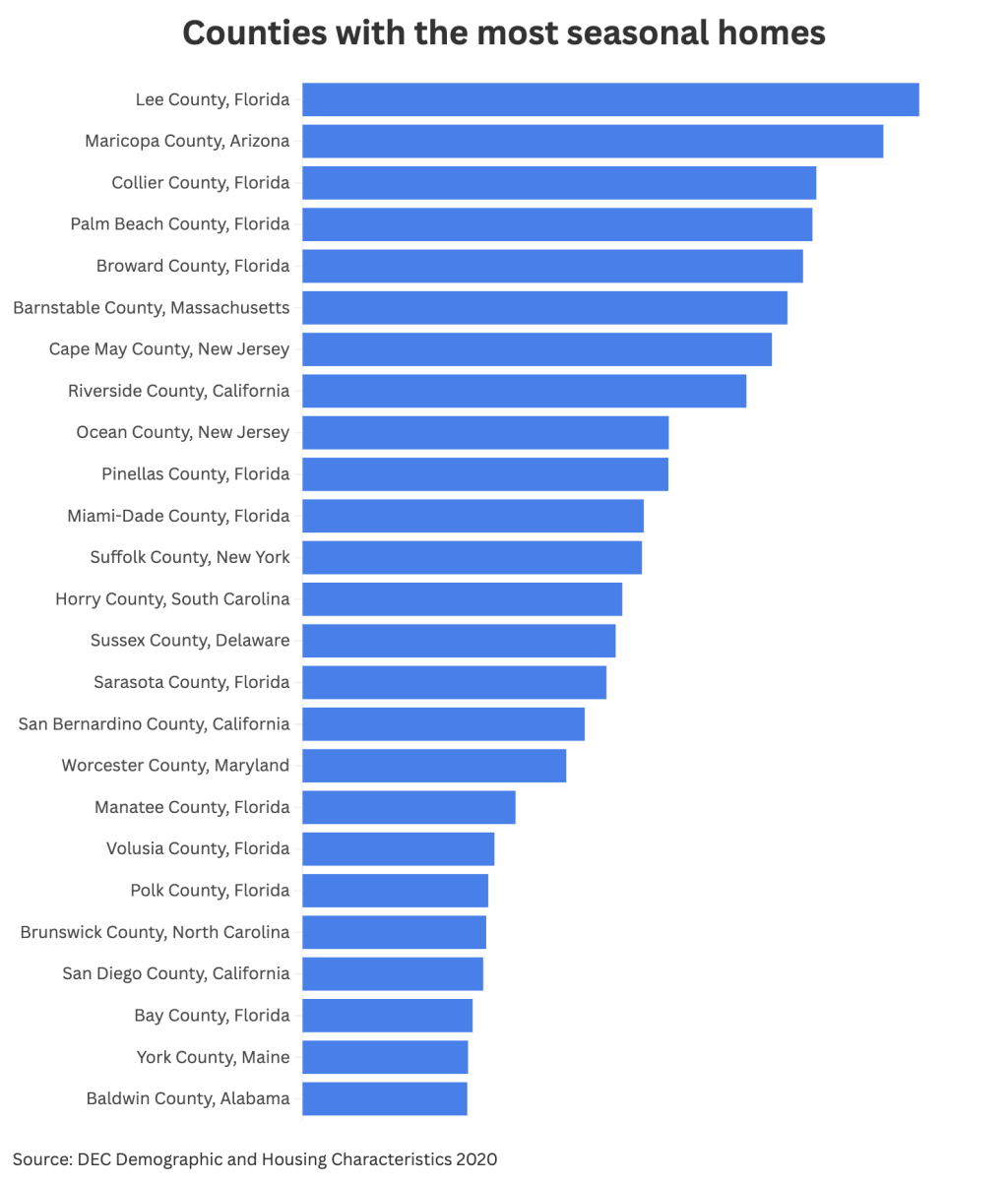
Focusing on counties with at least 5,000 total housing units, the data reveals which destinations are true second-home hotspots. These places attract seasonal residents for their scenic beauty, strong rental markets, and well-developed vacation economies.
Lee County, Florida: 69,007 seasonal homes, making up 17% of total housing; median price at $247,000
Barnstable County, Massachusetts: 54,267 seasonal homes, making up 33% of total housing; median price at $475,000
Collier County, Florida: 57,494 seasonal homes, making up 25% of total housing; median price at $314,000
Dukes County, Massachusetts: 7,747 seasonal homes, making up 44% of total housing; median price at $1,400,000
Colorado's ski counties and Michigan's lakefront areas also rank high, as do parts of the Pacific Northwest. In these areas, second homes can comprise a significant portion of the housing market, especially in small counties where seasonal population shifts are more noticeable.
Economic impact: How seasonal demand shapes local markets
Seasonal housing brings unique dynamics to local real estate markets. Unlike primary residences, vacation homes are subject to more pronounced seasonal price fluctuations and can limit inventory for full-time residents. According to Investopedia, seasonal trends can drive 5% to 10% swings in home prices depending on the time of year.
Local economies, meanwhile, often rely on these properties for tourism revenue and jobs. On Cape Cod, for instance, second homes make up 37% of the housing stock. Boston 25 News reported that since 2021, the number of rental property owners there has jumped 48%. Aspen, Colorado, sees economic activity year-round thanks to its status as a resort and arts and culture destination with demand for home maintenance, rental management, and hospitality services.
Interest rate impact and 2025 market outlook
Interest rates may make vacation homeownership more accessible again. Morgan Stanley projects that the 30-year mortgage rate, which sits at 6.77% as of June 26, could fall to as low as 6.25% by late 2025. A 0.75% drop would cut payments on a $1 million mortgage by about $400 per month, significant for buyers weighing the cost of a second property.
Rate changes uniquely affect vacation home sales, since these purchases are often discretionary and require larger down payments. If rates decline, many high-income buyers may see 2025 as the ideal time to lock in their dream destination home.
What draws buyers to prime vacation destinations
The appeal of vacation home markets goes beyond aesthetics. These places tend to offer:
Scenic amenities like beaches, mountains, or lakes
High rental income potential during peak seasons
Proximity to urban areas for weekend getaways
Strong resale value and long-term price appreciation
Established infrastructure to support tourism and seasonal living
Whether it's for investment, lifestyle, or legacy, owning a second home remains a powerful aspiration and a market force to watch.
Conclusion
Seasonal homes are transforming real estate markets across the U.S. With over 6 million second homes already in circulation and interest rates poised to dip in 2025, the appetite for vacation properties may soon grow even stronger. For would-be buyers, knowing where these homes concentrate — and how they impact local economies — can help identify the best opportunities for long-term value and lifestyle enjoyment.
If you're considering a vacation home in Connecticut, understanding the local market is key to making a smart investment. As a Realtor specializing in Connecticut real estate, I can help you navigate these trends and find the perfect property that meets your lifestyle goals and financial objectives. Contact me today to learn more about the opportunities available in our beautiful state.
Navigating the Shift: Portfolio Positioning Guide Macro Strategy & Real Estate Navigating the Shift: How to Position Your Portfolio as Bonds Sell Off and Housing Hits Its Seasonal Peak Market Insights • Portfolio Strategy Guide As we cruise through mid-May, we are officially entering the absolute peak of the spring housing market. Sidewalks are busy, […]
The Wealth Preservation Pivot Capitalizing on West Hartford’s Appreciation to Secure a Low-Carry Lifestyle If you own property in West Hartford, you are likely sitting on significant equity. Demand for luxury real estate across Connecticut-and specifically in our high-density hubs-is on a steady rise. For many homeowners, this creates a psychological “waiting game”: Is this […]
Market Insights What is the right listing price to command the highest premium? A data-driven analysis of West Hartford sales (Last 60 Days). Avg. Over Asking $45,349 Median DOM 5 Days Highest Premium 36.7% In today’s West Hartford market, your list price is more than a number-it’s a strategic lever. Based on 61 recent closed […]
Seller Strategy Know Your Competition: Why Savvy Sellers Should Scout Local Open Houses Selling a home is a competitive business. While it might feel counterintuitive to visit other listings when you’re busy prepping your own, attending local open houses is one of the most effective ways to gain a strategic advantage. It’s not about finding […]
Linkedin Facebook X Market Analysis: Decoding Buyer Demand in Hartford County By Alex Teplitskiy | Real Estate Insights In real estate, we often talk about the “sweet spot” of the market. To a casual observer, that might look like the price range where the most homes are selling. But for a savvy buyer or seller, […]
Facebook X Linkedin The Great Divide: Why Hartford is Defying National Real Estate Trends If you’ve been watching the national news lately, you might think the housing market is finally cooling off. Headlines from the National Association of Realtors (NAR) show inventory is rising and sales are slowing. But if you are looking for a […]
Facebook X Linkedin Why “Zestimating” Your CT Home Could Cost You Thousands If you’re looking at homes in Connecticut, you’ve likely seen the Zestimate. It’s convenient and instant, but according to recent data, it is surprisingly off the mark for our unique local market. While Zillow’s algorithm performs well in states with high-density subdivisions like […]



 Facebook
 X
X
 Pinterest
 Copy Link